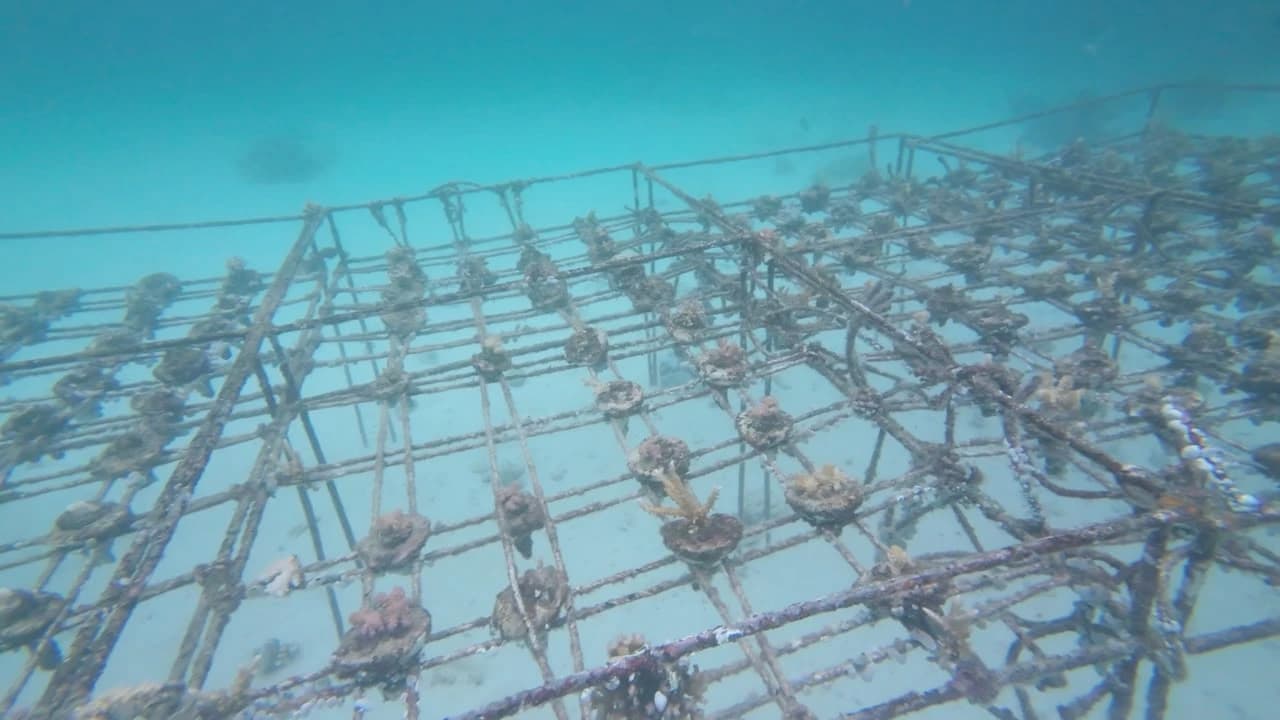
A coral nursery is an integrated biological support system, not simply a submerged frame. Successful nursery design must hold fragments securely, ensure optimal sunlight and water circulation, and allow regular maintenance without endangering divers or adjacent marine habitats.
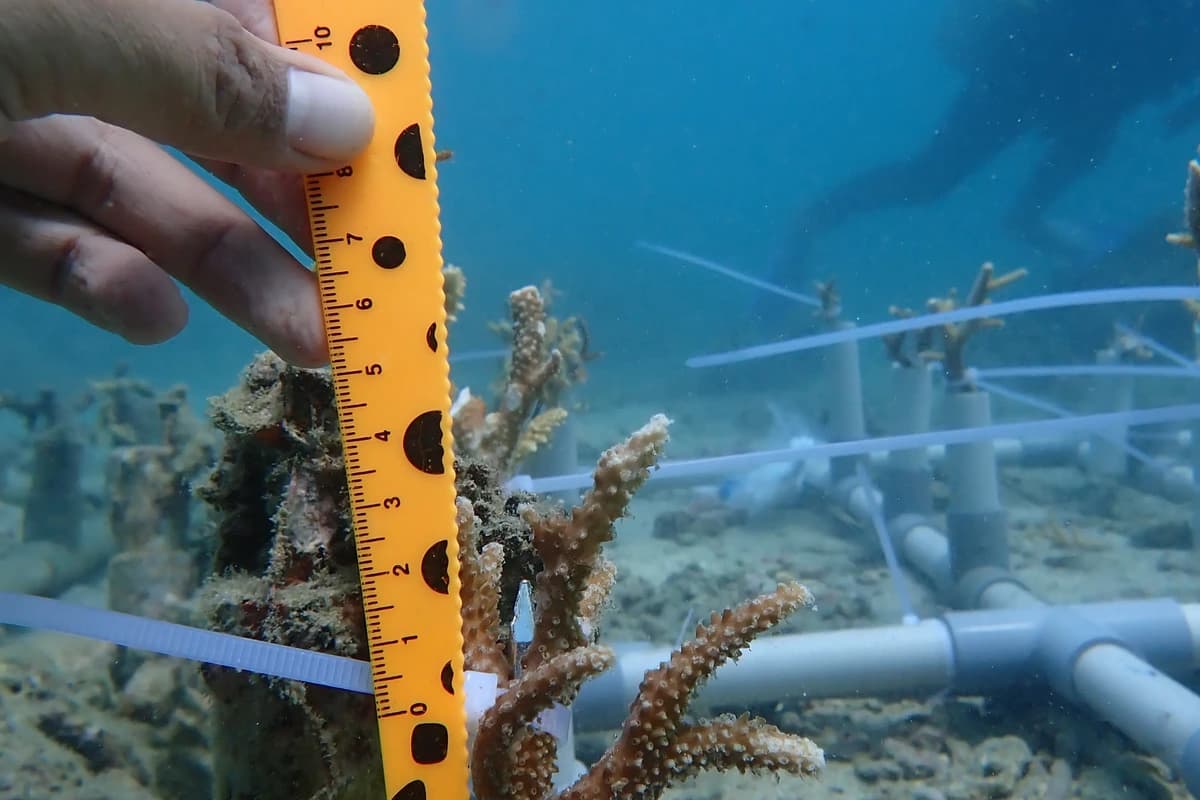
PVC Racks and concrete bases for seabed stability
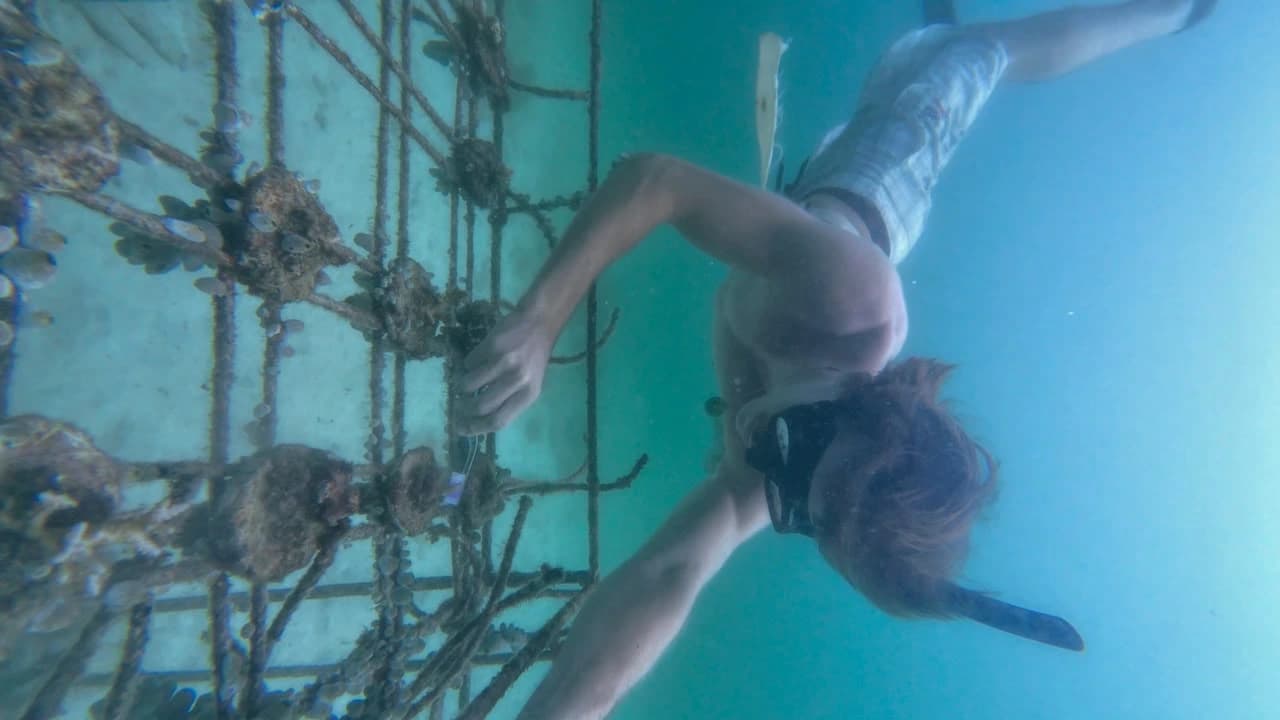
PVC Racks are designed as modular, stationary platforms resting securely on the seafloor. Paired with concrete anchor bases, this approach emphasizes long-term physical stability and allows individual fragments to be mapped and revisited with high geographic precision.
Their performance depends entirely on sound installation. Strong bottom surge, shifting sands, loose structural joints, or heavy sediment accumulation can impede coral health. Racks must be inspected routinely to ensure they do not shift or break apart into marine debris.
Floating Coral Nurseries for mid-water column growth
Floating Coral Nurseries (or hanging rope nurseries) suspend coral fragments several meters above the seabed within the mid-water column. This elevated position provides continuous water circulation, minimizes bottom sediment smothering, and can stimulate rapid vertical growth in branching species.
However, suspended systems demand meticulous buoyancy regulation, heavy-duty mooring anchors, tensioned lines, and safe clearance from maritime vessel traffic. Maintenance divers must inspect line tension, untangle twisted ropes, and adjust flotation as coral colonies accumulate weight.
Direct comparison of field performance
The choice of nursery method should align with the specific biological goals of each propagation phase. Fixed seafloor structures excel when positional stability and mapping are paramount, while floating arrays are optimal when maximizing current flow and juvenile growth rates.
| Aspect | PVC Rack / Concrete Base | Floating Coral Nursery |
|---|---|---|
| Position | Fixed on or near seabed | Suspended in mid-water column |
| Primary strength | High stability & fixed mapping | Enhanced water flow & rapid vertical growth |
| Primary risk | Sediment buildup & joint wear | Mooring failure & buoyancy shifts |
| Maintenance focus | Algae scrubbing & joint checks | Tension lines, depth & buoy adjustments |
Combining methodologies before outplanting
AAY combines benthic structures and floating mid-water systems to harness the distinct hydrodynamics of Aceh's waters. Delicate micro-fragments can begin life on floating lines before being transitioned to table racks for stabilization prior to final outplanting.
The most effective restoration choices are informed by empirical survival rates, calcification data, damage logs, diver maintenance hours, and unit costs. A technique that flourishes in one sheltered bay may produce completely different results in an exposed channel.
- Pilot test novel designs at small scales before scaling fragment counts.
- Maintain standardized tagging codes and survey intervals for rigorous comparison.
- Log ambient environmental variables including current speed, depth, water clarity, and sea temperature.
- Evaluate biological gains together with diver safety and lifecycle operational costs.
Frequently asked questions
Which is better: a PVC Rack or a Floating Coral Nursery?
Neither is universally superior. PVC Racks offer unmatched seafloor stability and mapping accuracy, while floating nurseries harness unobstructed water flow for rapid growth. The optimal choice depends on site depth, currents, coral species, and diver maintenance capacity.
Can both nursery methods be used together?
Yes! AAY often uses a stepped nursery strategy: fragments develop rapid initial growth on floating lines, then transfer to table racks for hardening before final outplanting onto recipient reefs.
What are the most critical comparison metrics?
Key evaluation metrics include fragment survival rates, monthly growth rates, mechanical breakage, biofouling cleaning frequency, unit construction costs, and underwater diver safety.
Information basis
This article is synthesized from Aceh Aquatic Youth program summaries and field data. Operational metrics reflect specific monitoring periods and scopes.
- AAY MethodsOperational Guidelines for PVC Racks, Concrete Substrates, and Hanging Nurseries
- MonitoringFragment Survival and Calcification Comparative Assessment Framework
More conservation publications to explore
Turn ocean knowledge into lasting action.
Discover Aceh Aquatic Youth field initiatives and connect with us about responsible support, volunteering, research, or partnership opportunities.