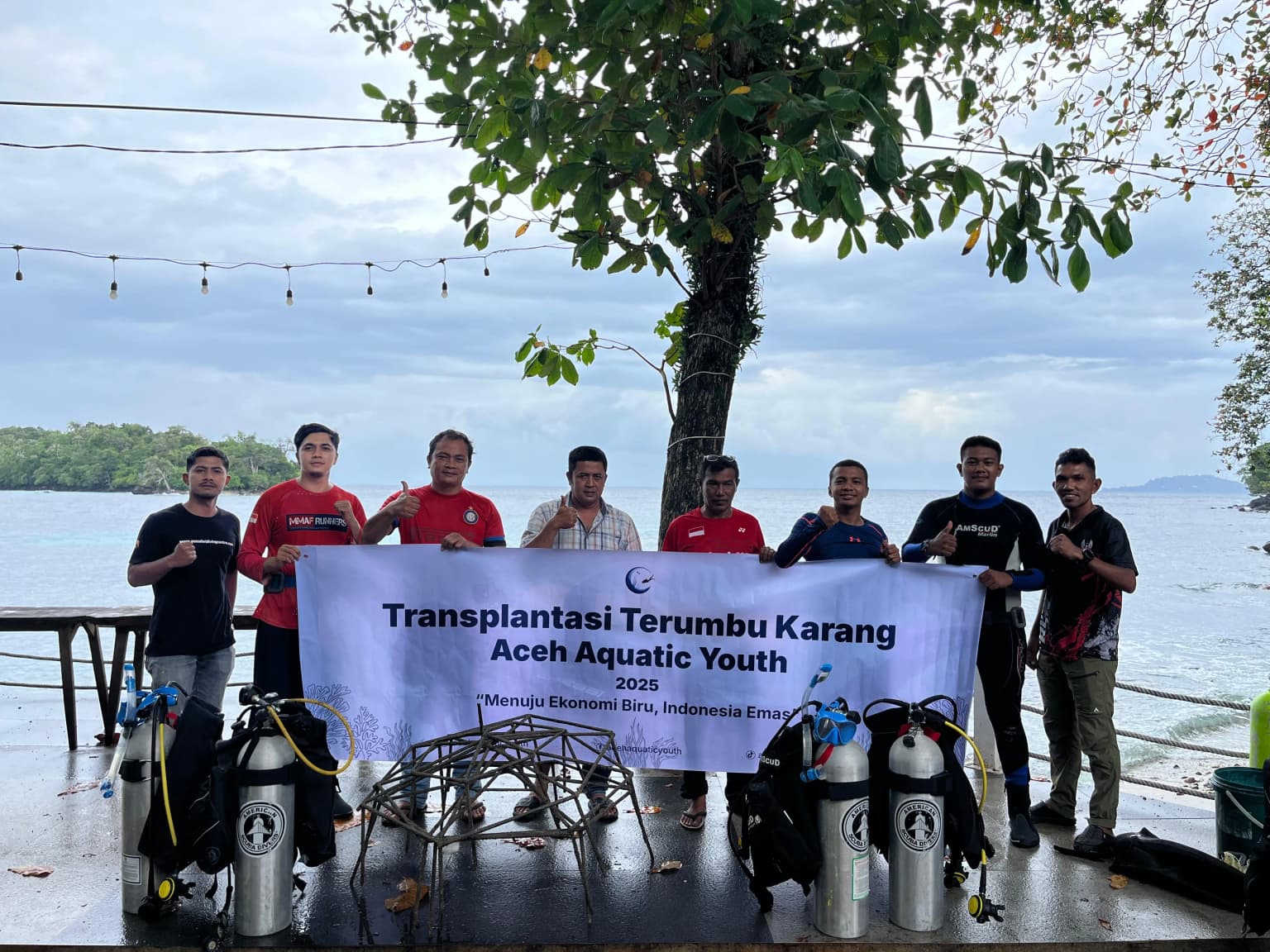
Aceh sits at the western edge of Indonesia, where island reefs, fishing grounds, tourism, and coastal settlements meet. These reefs are living infrastructure: they shelter marine life, soften wave energy, support livelihoods, and carry cultural value. Conservation succeeds when that whole system, not only individual corals, becomes healthier.
Why Aceh's coral reefs matter
Coral reefs create complex habitat for fish and other marine life. They also help dissipate wave energy before it reaches the shore. Around places such as Sabang and other island and mainland coasts, reef health is closely connected to fishing, diving, tourism, and the everyday safety of coastal communities.
That connection is why reef conservation cannot be separated from seagrass, mangroves, water quality, boat activity, and community decisions. A reef may be underwater, but many of the pressures affecting it begin on land or at the shoreline.
The pressures a restoration project must understand first
Heat stress and coral bleaching are major regional threats, but local pressures often determine whether a damaged site can recover. Sediment, waste, destructive anchoring, careless tourism, physical breakage, and poorly managed coastal development can keep a reef under constant stress.
Restoration should never be used to hide those causes. Before adding nursery structures or coral fragments, a team needs to ask why coral cover declined, whether that pressure can be reduced, and whether the site still has the conditions needed for recovery.
- Check water movement, depth, light, sediment, and signs of repeated disturbance.
- Speak with fishers, dive operators, residents, and site managers who know how the area changes through the year.
- Confirm permissions, safety procedures, and a monitoring plan before field installation.
Coral planting is one step; reef restoration is the system
Coral transplantation usually moves healthy fragments into a nursery or onto a prepared structure. It can help produce new colonies, test techniques, and accelerate recovery in carefully selected areas. But fragment counts alone do not prove ecological success.
A credible program records where fragments came from, limits harm to donor colonies, tracks survival and growth, maintains structures, and watches whether fish and other organisms return. It also compares results with the condition of the surrounding reef. The goal is not a crowded frame; the goal is a functioning ecosystem.
A practical restoration cycle
Methods vary by site, species, budget, and local conditions, but responsible projects usually follow a repeatable cycle. Each stage produces information needed for the next one.
- Assess the site. Record baseline conditions, sources of damage, natural coral recruitment, and practical risks.
- Select fragments carefully. Use naturally broken fragments where appropriate or take small donor fragments under expert guidance.
- Grow and maintain a nursery. Clean structures, replace loose ties, remove threats, and document mortality and growth.
- Transplant only when the site is ready. Match species and attachment methods to local depth, current, substrate, and exposure.
- Monitor repeatedly. Measure survival, growth, stability, disease, bleaching, and changes in the wider reef community.
- Adapt and report. Change weak methods, share failures as well as successes, and keep communities informed.
Monitoring is what makes restoration accountable
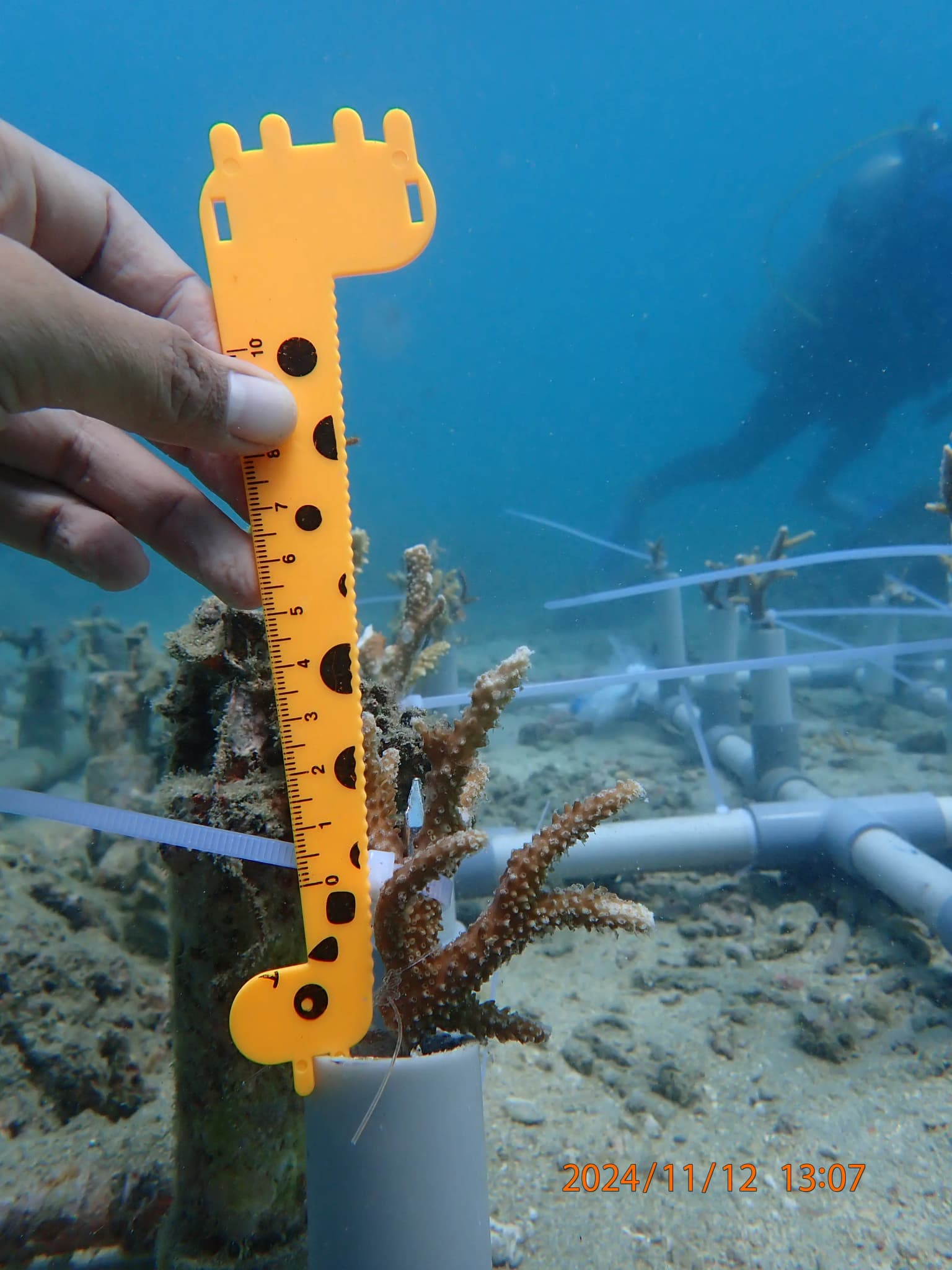
A photograph taken on planting day cannot show whether a fragment remains alive months later. Monitoring creates the evidence needed to understand survival, growth, breakage, disease, and maintenance needs. It also helps teams avoid repeating methods that look impressive but perform poorly.
Useful records do not need to begin with expensive technology. A consistent site map, fragment identifiers, repeat photographs, simple measurements, dates, and clear responsibility can already create a valuable long-term record. The most important feature is consistency.
Why young people and coastal communities belong at the center
Local participation is more than inviting volunteers to a single event. Fishers, dive guides, students, women's groups, village leaders, researchers, and government partners each hold knowledge or authority that a restoration team needs. Their involvement improves site choices, maintenance, safety, and long-term protection.
Young people can contribute through reef ecology training, underwater documentation, mapping, communications, beach-waste audits, mangrove care, and public education. Not every conservation role requires diving. Strong programs make room for different skills while maintaining clear safety and scientific standards.
How visitors, divers, and supporters can help responsibly
The best support reduces pressure instead of creating new pressure. Divers can maintain buoyancy, avoid touching coral, follow local guidance, and choose operators that use mooring systems rather than dropping anchors on reefs. Visitors can reduce single-use waste and avoid buying souvenirs made from coral or protected marine life.
Before donating or joining a planting event, ask how the site was selected, who maintains it, how survival is measured, and what happens when fragments die. Transparent answers are a stronger signal than a large planting target.
- Look for local permissions and partnerships.
- Ask for monitoring results, not only the number planted.
- Support education, maintenance, and waste prevention alongside transplantation.
- Choose long-term programs with named responsibilities and public updates.
Frequently asked questions
What is coral reef conservation?
It is the protection and recovery of reef ecosystems through pressure reduction, habitat management, community stewardship, monitoring, and, where suitable, active methods such as nurseries and transplantation.
What coral restoration methods are used in Aceh?
Methods can include in-water nurseries, fixed racks or frames, transplantation onto stable substrate, mooring systems that prevent anchor damage, and repeated ecological monitoring. The right method depends on local conditions and permits.
How long does a coral reef take to recover?
Coral fragments may show growth within months, but ecosystem recovery takes years and can be reversed by bleaching, storms, sediment, disease, or repeated disturbance. Long-term monitoring is essential.
Is planting more coral always better?
No. Planting at an unsuitable or still-damaged site can waste resources and harm donor colonies. Quality site selection, genetic and species diversity, maintenance, and survival matter more than a headline planting number.
Can I volunteer without being a diver?
Yes. Conservation programs need help with education, data entry, photography, mapping, coastal clean-ups, mangrove care, communications, fundraising, and event logistics. Field roles should match training and safety requirements.
Further reading and local sources
These sources provide additional context on reef conditions, monitoring, community rehabilitation, and local restoration practice.
- Aceh governmentCoral reef information page
- Ministry of Marine Affairs and FisheriesMonitoring transplanted coral in Aceh Barat Daya
- EkuatorialYoung people in Sabang move to rehabilitate coral reefs
- Ocean GardenerAn insight into Aceh's coral reefs
Turn knowledge into careful action.
Explore our field programs or support the long-term work behind nursery care, monitoring, education, and community coordination.